Gian
|
8 min
|
December 18, 2025
Global stocks rising and falling together, inflation lurking, what protects your portfolio when traditional diversifiers fail? Discover why commodities deserve a spot, with practical pros, cons, and easy access options.
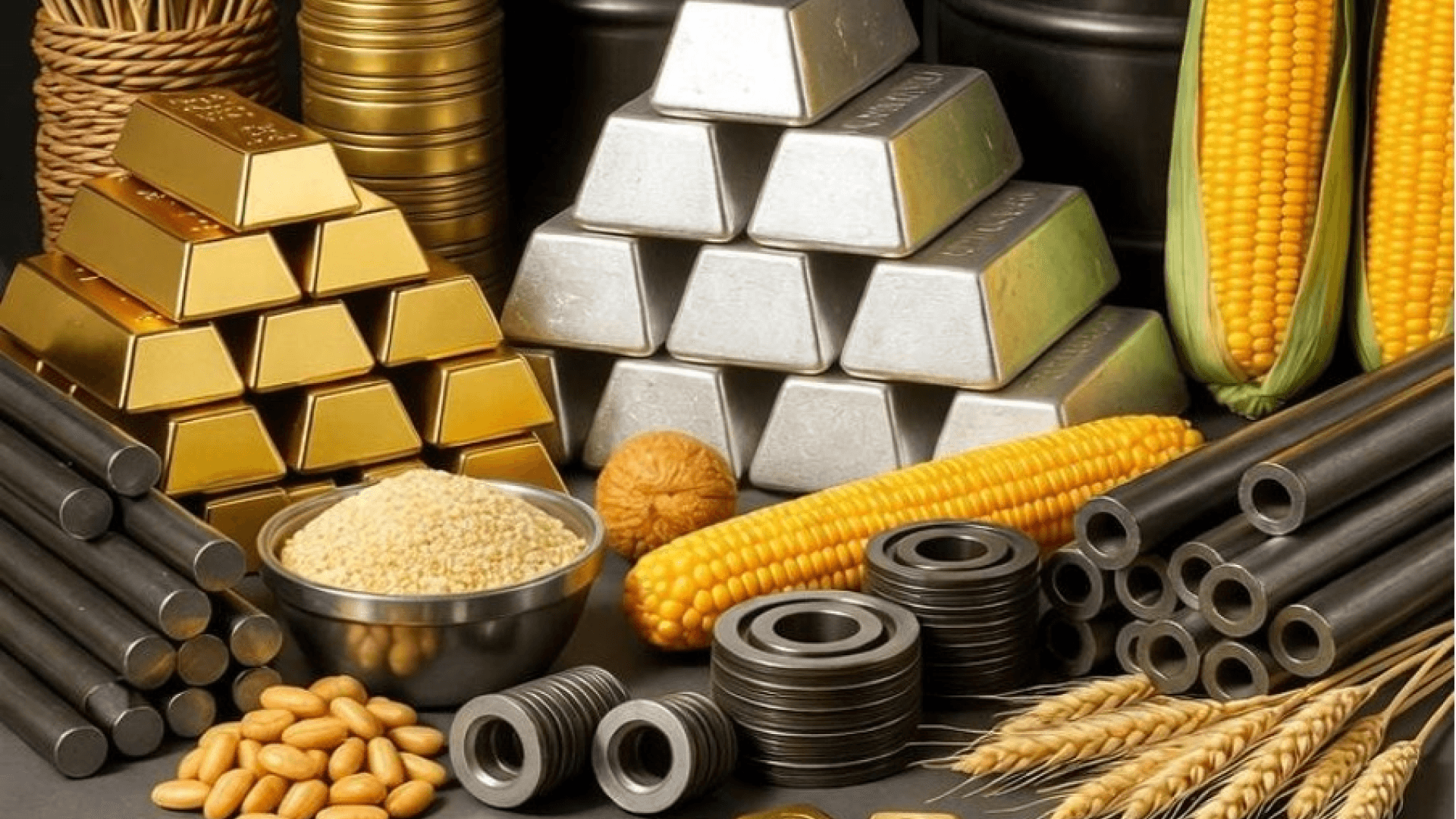
In today's volatile markets, global stock markets often move in tandem, leaving portfolios exposed during inflation spikes or economic shifts. Commodities, tangible assets like metals, energy, and agriculture, offer real diversification, providing a possible hedge when traditional assets falter.
What Are Commodities?
Commodities are physical goods divided into "hard" (extracted, like oil, gold, copper) and "soft" (grown, like wheat, coffee). Investors access them indirectly via futures, ETFs, or stocks, avoiding direct storage hassles.
Key examples include:
Gold and silver: Classic safe havens.
Oil and natural gas: Tied to global energy demand.
Copper and aluminum: Industrial growth indicators.
Lithium: Critical for EV batteries and energy storage.
Agricultural products: Wheat, corn, coffee - influenced by weather and harvests.
Why Add Commodities for Diversification?
Commodities show low or negative correlation with stocks and bonds, shining during crises. Historically, they excel as inflation hedges, rising when consumer prices do, unlike equities which suffer from higher rates.
Precious metals like gold and silver have led gains amid uncertainty, while energy faced oversupply pressure. Industrial metals, including copper and lithium, benefit from the green transition despite short-term volatility.

Easy Ways to Get Started
There are several paths to commodity exposure, from simple to advanced:
ETFs: The easiest for most, diversified, liquid, and traded like stocks. Popular broad ones include:
Invesco Bloomberg Commodity UCITS ETF (ticker: CMOD) Tracks the Bloomberg Commodity Index for diversified exposure.
iShares Diversified Commodity Swap UCITS ETF (ticker: SXRS) Swap-based tracking of a broad Bloomberg Commodity basket.
UBS ETF Bloomberg Commodity CMCI SF UCITS ETF (ticker: BCCMA) Optimized constant maturity strategy across multiple sectors.
Physical holdings: Buy gold/silver bars or coins for tangible ownership (but watch storage and insurance costs).
Commodity producer stocks: Invest in mining or energy companies, offers leverage to prices plus company growth potential.
Futures contracts: Direct bets on prices via exchanges (high leverage, margin requirements, best for experienced traders due to complexity and risk).
Single-commodity funds or ETNs: Focused exposure, like gold or oil trackers.
Pick based on your risk tolerance and experience.
The Upsides
Commodities bring exciting benefits that can supercharge a portfolio:
Diversification: They march to their own drum, often moving opposite to stocks and bonds, smoothing out bumpy rides during market crashes or when everything correlates.
Inflation: When prices soar at the pump or grocery store, commodity values typically climb too, preserving (and boosting) your real wealth, proven in high-inflation eras like the 1970s or 2020s spikes.
Boom potential: Real-world events create massive upside, think energy surges from demand booms, metal rallies in tech/green shifts, or agriculture spikes from weather wins. Supply crunches can deliver superior returns.
Portfolio polish: Even a small 5-15% slice has historically improved risk-adjusted returns, and added alpha through sector rotations.
Tangible appeal: Backed by physical scarcity and endless global needs, they feel "real" in a world of digital assets.
The Downsides
Commodities aren't all smooth sailing, here's the reality check:
Extreme volatility: Prices can rocket or crater 30-50%+ in a year from unpredictable shocks like wars, pandemics, bumper harvests, or demand slumps. Charts show wild swings that test nerves.
No passive income: Unlike stocks (dividends) or bonds (interest), they yield nothing while held, just price changes. Long dry spells can drag returns.
Futures pitfalls: Many vehicles use contracts, "contango" (future prices higher) erodes gains on rolls, while "backwardation" helps, but it's unpredictable and can cause underperformance vs. spot prices.
Event-driven drama: Geopolitics (trade wars, sanctions), weather extremes (floods ruining crops), or tech disruptions add layers of uncertainty, no earnings reports to fall back on.
Cyclical nature: Multi-year booms and busts mean timing matters, oversupply can crush sectors for ages.
Opportunity cost and complexity: In low-inflation calm markets, they often lag stocks, plus, some options (futures) demand active monitoring and can amplify losses.
They're thrilling but demanding, not for everyone or as a big holding.

A Quick Look Back
Commodities have a rich track record of delivering in tough times, making them a fascinating study for any investor.
Take the 1970s: Oil embargoes and geopolitical tensions sparked massive price surges across energy and metals, turning broad commodity indexes into standout performers while stocks struggled with stagflation.
Fast-forward to the 2000s "supercycle," fueled by rapid industrialization in emerging markets like China, commodities boomed for years, with energy, metals, and agriculture all rallying in waves.
Gold, the eternal star, has preserved wealth through wars, currency collapses, and centuries of economic upheaval, its long-term chart shows steady climbs during uncertainty.
Key takeaway? Diversified commodity baskets outperform single picks by capturing rotating booms (energy one decade, metals the next) while cushioning inevitable busts. History proves they're not just hedges, they're cycle riders that reward patient, balanced exposure.
The Bottom Line
In a nutshell, commodities aren't the calm, predictable investment, they're the energetic ones who bring volatility, excitement, and unique strengths.
They're not meant to dominate (too risky for that) or suit super-conservative folks chasing steady income. Multi-year slumps happen, and sharp drawdowns can sting.
Yet, when added thoughtfully in modest amounts, say 5-10% via ETFs or other vehicles, they shine: bolstering diversification, battling inflation, and unlocking upside from global trends like energy shifts or resource demands.
In today's world of lingering uncertainties, geopolitical twists, and evolving economies, this small slice can make your overall portfolio more resilient, balanced, and potentially rewarding over the long haul.
Ready to diversify smarter? Experiment with allocations, stay informed on cycles, and watch your portfolio thrive.
Disclaimer: The content provided in this blog post is for informational and educational purposes only and does not constitute financial, investment, or other professional advice. All data, figures, and examples are illustrative and should not be interpreted as guarantees of future performance or recommendations for specific investment actions. While we strive to ensure the accuracy of the information presented, we make no representations or warranties as to its completeness, reliability, or suitability for your individual financial situation. Always consult with a qualified financial advisor or professional before making any investment decisions. The author disclaims any liability for actions taken based on the information provided herein.