Gian
|
5 min
|
January 14, 2026
Trends are the market's primary language. Prices move in one direction, up, down, or sideways, until something changes. Identifying and trading with the trend remains one of the most reliable edges in investing and trading.

What Is a Trend?
A trend is a sustained directional movement in price over time.
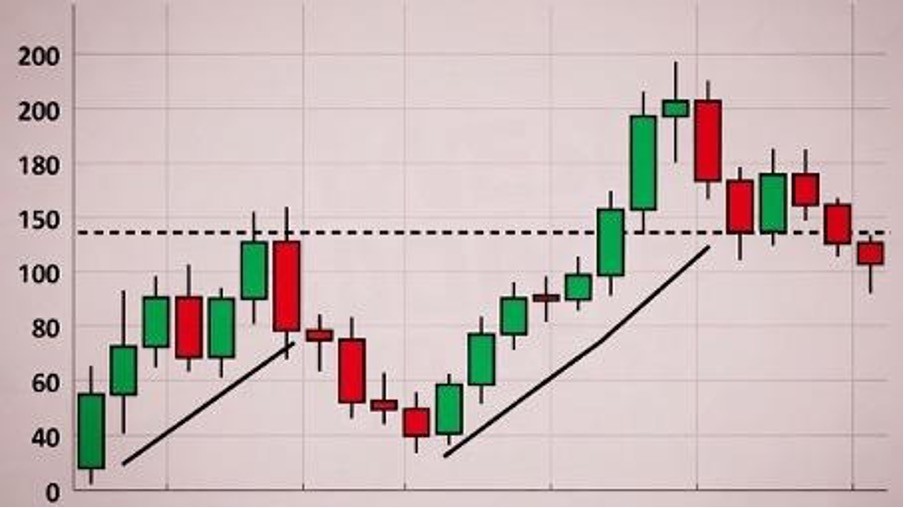
Uptrend: Series of higher highs and higher lows.
Downtrend: Series of lower highs and lower lows.
Sideways / Range: Price oscillates between support and resistance without clear direction.
Trends exist on different timeframes:
Primary trend (long-term, months to years)
Secondary trend (intermediate corrections, weeks to months)
Minor trend (short-term noise, days or less)
Most profitable strategies align with the primary trend and use secondary pullbacks for entry.
Tools for Identifying Trends
Trendlines Connect two or more swing lows (uptrend) or highs (downtrend). Valid trendline: at least two touches, price respects the line, steeper lines break faster. Once broken with conviction (strong close outside line + volume), trend likely changes.
Channels Parallel lines drawn around price action. Price bounces between upper and lower boundaries. Breakout from channel often signals acceleration or reversal.
Moving Averages Smooth price data to reveal underlying direction.
Simple Moving Average (SMA): Equal weight.
Exponential Moving Average (EMA): Weights recent prices more. Common setups: 50-day & 200-day SMA → “Golden Cross” (50 > 200) signals uptrend, “Death Cross” (50 < 200) signals downtrend.
Price above rising MA = uptrend, below falling MA = downtrend.
Price Action & Trend Confirmation
Price action is the clearest trend signal. Uptrend: Higher highs + higher lows. Downtrend: Lower highs + lower lows.
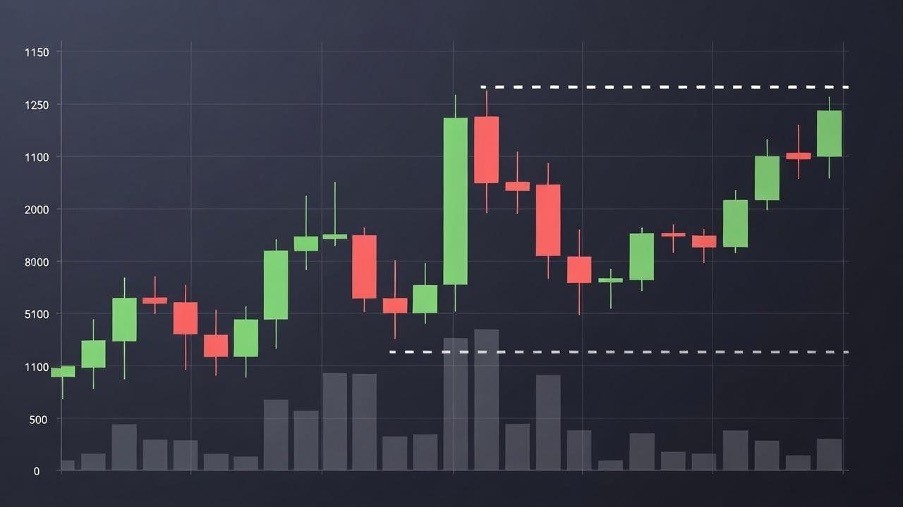
Volume confirms:
Rising volume on up moves supports uptrend.
Declining volume on pullbacks shows healthy correction.
Climactic volume at extremes often signals exhaustion.
Breakouts:
Strong close outside resistance/support + volume = valid breakout. Low-volume breakouts frequently fail (fakeouts).
Trend Strength & Duration
ADX (Average Directional Index) measures trend strength (0–100).
>25 = strong trend
<20 = range-bound
Slope of trendline: Steeper trends exhaust faster. Time-based benchmarks: 200-day MA often defines long-term trend.
Trend Reversals & Changes
Reversals rarely happen instantly. Signs of exhaustion:
Divergences (price higher high, indicator lower high)
Climactic volume
Reversal patterns: Head & Shoulders, double top/bottom, rounding top/bottom
Support/resistance flip: Broken resistance becomes support (and vice versa).
Trend Continuation Patterns
Trends pause before resuming. Common patterns:
Flags & pennants (brief consolidation)
Triangles & wedges (contracting range)
Breakout in direction of prior trend confirms continuation.
Common Mistakes & Pitfalls
Fighting the trend (“catching falling knives”)
Over-drawing trendlines (every swing becomes a line)
Ignoring higher timeframes (daily signal vs weekly trend)
Assuming every pullback is a reversal
Trading without confirmation (volume, close outside line)
Trend Analysis in Portfolio Management
Trend-following determines entry/exit timing.
Stay invested in confirmed uptrends.
Reduce exposure or hedge in downtrends.
Use trends to time diversification and rebalancing.
Conclusion & Tips
Trends do not last forever, but trading with them increases probability. Wait for confirmation. Use multiple tools. Practice drawing trendlines on historical charts. Patience is the most important skill.
Disclaimer: The content provided in this blog post is for informational and educational purposes only and does not constitute financial, investment, or other professional advice. All data, figures, and examples are illustrative and should not be interpreted as guarantees of future performance or recommendations for specific investment actions. While we strive to ensure the accuracy of the information presented, we make no representations or warranties as to its completeness, reliability, or suitability for your individual financial situation. Always consult with a qualified financial advisor or professional before making any investment decisions. The author disclaims any liability for actions taken based on the information provided herein.